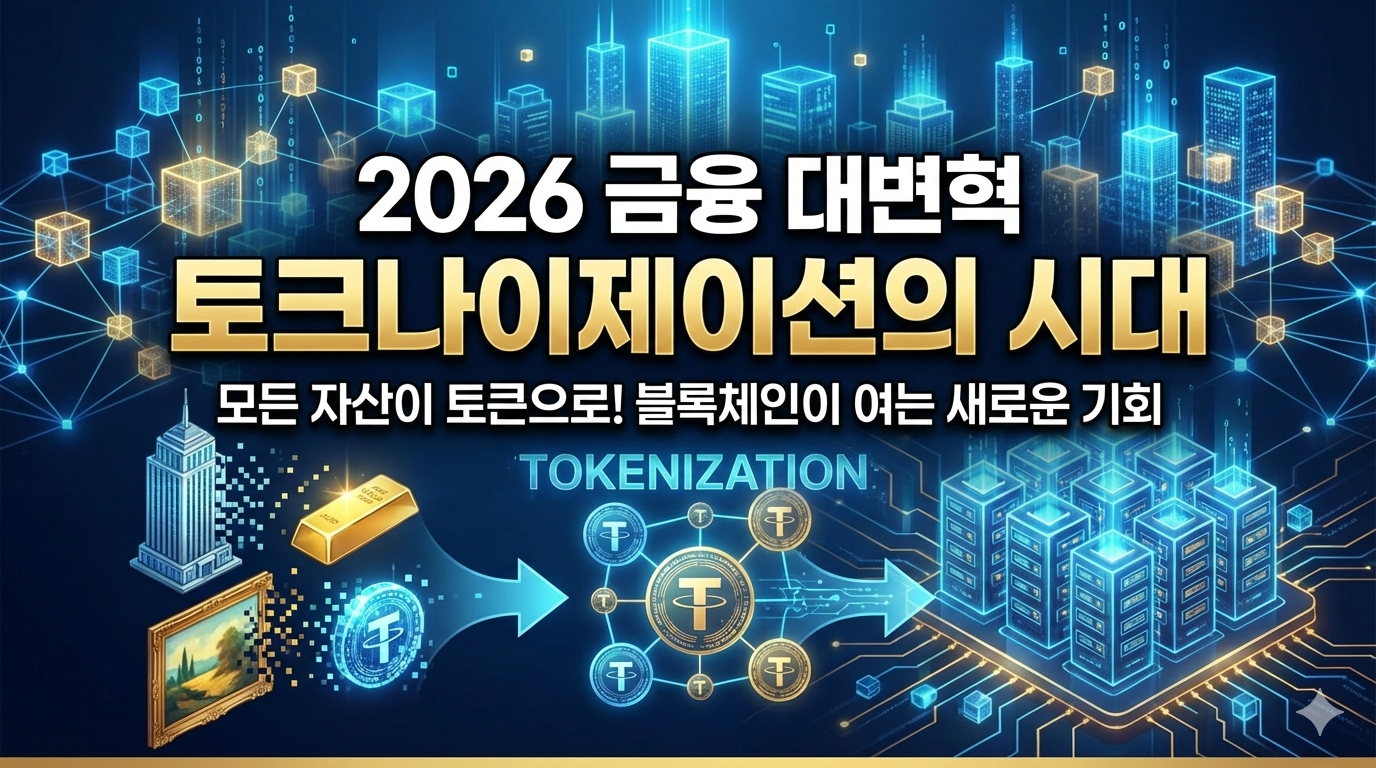
2026년, 자산 토큰화(Tokenization) 원년의 서막
“조물주 위에 건물주”라는 말이 일종의 사회적 해학처럼 번지는 시대입니다. 하지만 평범한 직장인이 수십억, 수백억 원에 달하는 상업용 빌딩을 소유한다는 것은 그동안 불가능에 가까운 영역이었습니다. 그러나 이제 기술은 우리에게 새로운 해답을 제시하고 있습니다. 바로 ‘토크나이제이션(Tokenization, 자산 토큰화)’입니다.
2026년은 자산 토큰화의 원년으로 명명되고 있으며, 가상자산 시장과 기존 전통 금융 영역이 결합하는 거대한 변혁의 파도가 오고 있음을 경고합니다. 단순히 비트코인과 같은 암호화폐에 투자하는 차원을 넘어, 우리가 발을 딛고 서 있는 부동산, 우리가 듣는 음악의 저작권, 심지어 축사에서 자라는 한우까지 모든 실물 자산이 ‘토큰’의 형태로 거래되는 시대가 열린 것입니다.
이 글에서는 조각 투자의 개념부터 시작하여 RWA(실물 자산 토큰화), STO(토큰 증권 발행)의 메커니즘, 그리고 현재 대한민국 금융당국과 관련 부처가 겪고 있는 규제적 갈등과 나아가야 할 방향에 대해 심도 있게 분석해 보겠습니다.
2026: The Dawn of the Era of Asset Tokenization
The phrase “above the Creator stands the building owner” has become a kind of social satire in our time. Yet for the average salaried worker, owning a commercial building worth tens or hundreds of billions of won has long been nearly impossible. Now, however, technology is offering a new answer: Tokenization.
The year 2026 is being named the inaugural year of asset tokenization, signaling a massive wave of transformation in which the crypto asset market converges with traditional finance. This goes far beyond investing in cryptocurrencies like Bitcoin. Real estate beneath our feet, the music we listen to, and even premium Korean cattle raised on farms are entering an era where all real-world assets can be traded in the form of “tokens.”
In this article, we will analyze in depth the concept of fractional investment, the mechanisms of RWA (Real World Asset tokenization) and STO (Security Token Offering), as well as the regulatory conflicts currently unfolding among Korean financial authorities and the direction the market must take.
조각 투자의 진화, 누구나 건물주가 되는 세상
토크나이제이션을 이해하기 위한 가장 친숙한 입구는 ‘조각 투자’입니다. 조각 투자의 핵심은 고가의 자산을 소유권을 분할하여 소액으로도 투자할 수 있게 만드는 것입니다.
-
부동산과 저작권의 민주화: ‘소유’와 같은 플랫폼은 거대한 상업용 빌딩의 가치를 잘게 나누어 일반 투자자에게 판매합니다. 이는 마치 삼성전자의 주식 한 주를 보유함으로써 그 거대 기업의 주주가 되는 것과 같은 원리입니다. ‘뮤직카우’는 음악 저작권료 참여 청구권을, ‘서울옥션블루’는 고가의 미술품이나 골동품을 조각내어 거래하게 함으로써 고액 자산가들의 전유물이었던 투자 영역을 대중화시켰습니다.
-
한우 투자 플랫폼 ‘뱅카우’의 사례: 더욱 흥미로운 점은 생물 자산인 한우에 대한 투자입니다. 투자자가 송아지 구매 비용을 펀딩하면 농가가 이를 사육하고, 이후 경매를 통해 발생한 수익을 투자자와 농가가 배분하는 방식입니다. 인플레이션 시대에 실물 자산의 가치 상승분과 생물의 성장 가치를 동시에 누릴 수 있는 혁신적인 비즈니스 모델입니다.
이러한 조각 투자는 단순히 ‘같이 사는 것’인 민법·상법상의 실물 거래를 넘어, 자산에서 발생하는 수익에 대한 지분을 청구하는 ‘신종 증권’의 성격을 띠게 됩니다. 이는 자본시장법의 적용을 받는 제도권 금융 안으로 들어오고 있음을 의미합니다.
The Evolution of Fractional Investment: A World Where Anyone Can Be a Building Owner
The most familiar entry point to understanding tokenization is fractional investment. Its core idea is simple: divide ownership of high-value assets so that they can be invested in with small amounts of capital.
Democratizing Real Estate and Copyright: From Exclusivity to Shared Ownership
Platforms like “Soyo” divide the value of large commercial buildings into small portions and sell them to retail investors. It operates much like owning a single share of Samsung Electronics makes you a shareholder of a giant corporation.
“Musicow” tokenizes royalty participation claims in music copyrights, while “Seoul Auction Blue” fractionalizes high-value artworks and antiques, opening previously exclusive investment domains to the broader public.
The Case of “Bankcow”: Investing in Korean Cattle
Even more intriguing is investment in biological assets such as premium Korean cattle. Investors fund the purchase of calves, farmers raise them, and profits from eventual auction sales are shared between investors and farmers. In an inflationary era, this innovative business model allows investors to capture both the appreciation of tangible assets and the growth value of living assets.
These forms of fractional investment go beyond simple co-ownership under civil or commercial law. They increasingly resemble “new types of securities” that grant claims on income generated by assets—bringing them under the scope of capital markets regulation.
RWA와 STO, 블록체인 기술이 만드는 새로운 그릇
자산 토큰화의 핵심 기술적 기반은 블록체인(Blockchain)입니다. 블록체인은 ‘거대한 단톡방’에 비유되듯, 모든 거래 참여자가 실시간으로 정보를 공유하고, 구성원 대다수의 동의 없이는 조작이 불가능한 분산 원장 기술이 금융의 투명성을 보장하는 것입니다.
-
RWA(Real World Asset): 온체인(On-chain), 즉 블록체인 네트워크 위로 올라온 실물 자산을 뜻합니다. 부동산, 채권, 금, 주식 등 현실 세계의 가치를 디지털 토큰으로 변환하는 과정입니다.
-
ST(Security Token)와 STO(Security Token Offering): 토큰 증권이란 분산 원장 기술을 활용해 자본시장법상 증권을 디지털화한 것입니다. 기존의 전자 증권이 중앙집중식 계좌부에 기재되었다면, 토큰 증권은 비중앙집중식 블록체인에 기재됩니다. 이 토큰 증권을 발행하고 유통하는 전 과정을 STO라고 부릅니다.
기존 금융 시스템에서는 주식이나 채권 거래 시 중앙 예탁기관이나 은행과 같은 중간 매개자가 반드시 필요했습니다. 하지만 토크나이제이션이 완성되면 스마트 컨트랙트(Smart Contract)를 통해 P2P(개인 간) 거래가 가능해지며, 거래 비용 절감과 24시간 거래 가능한 유연성을 확보하게 됩니다.
RWA and STO: A New Financial Framework Built on Blockchain
The core technological foundation of asset tokenization is Blockchain. Often compared to a “massive group chat,” blockchain is a distributed ledger where all participants share transaction data in real time, and manipulation is virtually impossible without consensus from the majority. This ensures transparency in financial transactions.
RWA (Real World Asset)
RWA refers to real-world assets that are brought “on-chain”—onto blockchain networks. Real estate, bonds, gold, stocks, and other tangible or financial assets are converted into digital tokens representing their value.
ST (Security Token) and STO (Security Token Offering)
A security token is a digital representation of securities under capital market law, issued using distributed ledger technology. While traditional electronic securities are recorded in centralized accounts, security tokens are recorded on decentralized blockchains. The entire process of issuing and distributing these tokens is called an STO.
In traditional financial systems, intermediaries such as central depositories or banks are required for trading stocks and bonds. With tokenization, however, smart contracts enable peer-to-peer transactions, reducing costs and allowing for 24/7 trading flexibility.
글로벌 트렌드와 한국 시장의 잠재력
세계 금융의 중심지인 뉴욕증권거래소(NYSE)는 이미 블록체인 기반의 주식 거래 토큰화를 준비하고 있습니다. 주식 거래를 토큰화하면 거래 시간의 제약이 사라지고 전 세계 투자자가 실시간으로 연결되는 혁명이 일어납니다.
한국 시장의 잠재력 또한 어마어마합니다. 3일 PWC 경영연구원 등의 분석에 따르면, 국내 조각 투자 및 토큰 증권 시장 규모는 GDP 대비 가파른 상승세를 보일 것으로 전망됩니다. 특히 2030년에 이르면 부동산, 주식은 물론 비금융 자산인 RWA가 전체 토큰 증권 시장의 상당 부분을 차지하며 금융 생태계의 주류로 자리 잡을 것입니다.
Global Trends and the Potential of the Korean Market
The New York Stock Exchange (NYSE), the epicenter of global finance, is already preparing for blockchain-based tokenized stock trading. Tokenization could eliminate time constraints and connect investors worldwide in real time.
The Korean market also holds immense potential. According to analysis by PWC Research Institute, the domestic fractional investment and security token market is expected to rise sharply relative to GDP. By 2030, not only real estate and stocks but also non-financial RWAs are projected to account for a substantial portion of the security token market, becoming a mainstream component of the financial ecosystem.
한국 STO 시장의 규제 샌드박스와 부처 간 갈등
기술적 준비와 시장의 기대에도 불구하고, 대한민국 STO 시장은 현재 큰 난관에 봉착해 있습니다. 2026년 1월, 국회에서 전자증권법과 자본시장법 개정안이 통과되며 법적 근거는 마련되었지만, 시행 과정에서 부처 간의 입장 차이가 극명하게 갈리고 있기 때문입니다.
-
발행과 유통의 분리 원칙: 금융위원회는 시장의 투명성을 위해 토큰을 발행하는 주체와 유통하는 주체를 분리해야 한다는 입장입니다. 이는 은행이 특정 기업에 자금을 몰아주지 못하게 하는 ‘은산분리’와 유사한 논리입니다.
-
중소벤처기업부 vs 금융위원회: 그동안 규제 샌드박스(Sandbox)를 통해 조각 투자 비즈니스를 키워온 중소벤처기업부는 기존 스타트업들의 생존권을 보호해야 한다고 주장합니다. 반면, 금융위는 한국거래소(KRX)나 넥스트레이드와 같은 공공적 성격의 거대 운영사를 유통 시장의 중심으로 두려 합니다.
-
지연되는 시행: 루센트블록과 같은 혁신 기업들이 샌드박스 안에서 어렵게 일궈온 비즈니스 모델이 제도권 편입 과정에서 기존 거대 금융 권력(거래소 등)에 밀려날 위기에 처하면서, 시행 시기가 계속해서 늦어지고 있습니다. 이는 자칫 글로벌 경쟁력 상실로 이어질 수 있는 위험한 상황입니다.
Korea’s STO Regulatory Sandbox and Inter-Ministerial Conflict
Despite technological readiness and strong market expectations, Korea’s STO market faces significant hurdles. Although amendments to the Electronic Securities Act and the Capital Markets Act passed the National Assembly in January 2026, sharp disagreements among government ministries have delayed implementation.
Separation of Issuance and Distribution
The Financial Services Commission insists on separating token issuance from distribution to ensure market transparency, similar in logic to the separation of banking and industry.
Ministry of SMEs vs. Financial Authorities
The Ministry of SMEs and Startups, which nurtured fractional investment businesses through regulatory sandboxes, argues that the survival of innovative startups must be protected. Meanwhile, financial regulators favor placing distribution under large public institutions such as the Korea Exchange (KRX) or Nextrade.
Delayed Implementation
Innovative firms like Lucent Block, which developed business models within sandbox frameworks, now face the risk of being overshadowed by dominant financial institutions during institutional integration. Continued delays threaten Korea’s global competitiveness in this rapidly evolving sector.
전략적 제언 – 주도권을 놓치지 않기 위한 절충안
글로벌 금융 시장은 한 치의 양보 없이 토크나이제이션을 향해 달려가고 있습니다. 한국이 국내 부처 간의 다툼으로 시간을 허비하는 사이 미국과 유럽 기업들이 시장을 선점한다면, 우리는 또다시 거대한 산업의 주도권을 뺏기게 될 것입니다.
이를 해결하기 위해서는 현실적인 절충안이 필요합니다. 예를 들어, 특정 분야(예: 상업용 부동산)에서 이미 노하우를 쌓은 혁신 기업에게 일정 기간(2~3년) 독점적인 유통 권한을 부여하여 생태계를 보호하고, 이후 시장이 성숙해지면 거래소와 같은 대형 기관들과 자유롭게 경쟁하게 하는 단계적 개방 방식이 고려될 수 있습니다. 중요한 것은 ‘누가 주도하느냐’보다 ‘얼마나 빨리 시행하여 시장을 형성하느냐’입니다.
Strategic Proposal: Securing Leadership Through Compromise
Global financial markets are advancing toward tokenization without hesitation. If Korea continues internal disputes while the U.S. and Europe move ahead, it risks losing leadership in yet another transformative industry.
A pragmatic compromise is essential. For example, innovative firms with proven expertise in specific sectors (such as commercial real estate) could be granted exclusive distribution rights for a limited period (2–3 years) to stabilize the ecosystem. As the market matures, full competition with larger institutions could follow. The critical question is not who leads, but how quickly implementation occurs.
흔들리는 경제 속에서 토큰 경제를 준비하라
자산 토큰화는 단순한 유행이 아니라 금융의 본질을 바꾸는 구조적 변화입니다. 아날로그 증서에서 전자 증권으로, 그리고 이제는 블록체인 기반의 토큰 증권으로 자산의 형태가 진화하고 있습니다. 2026년은 그 거대한 변화가 우리 눈앞에 현실로 다가오는 해가 될 것입니다.
이 변화의 파도에 쓸려나갈 것인가, 아니면 변화를 이해하고 준비하여 기회를 잡을 것인가의 기로에 서 있습니다. 이제는 투자자들도 단순한 주식, 채권을 넘어 RWA와 STO라는 새로운 자산 클래스에 관심을 가져야 합니다. 금융의 민주화는 기술을 이해하는 자에게만 열려 있는 문이기 때문입니다.
Prepare for the Token Economy in an Uncertain Economic Era
Asset tokenization is not a passing trend—it is a structural transformation reshaping the foundations of finance. From analog certificates to electronic securities, and now to blockchain-based security tokens, the evolution of asset forms continues.
The year 2026 will mark the moment when this transformation becomes a visible reality. The choice is clear: be swept away by the tide of change, or understand and prepare for it to seize opportunity.
Investors must look beyond traditional stocks and bonds and begin exploring new asset classes such as RWA and STO. Financial democratization opens its doors only to those who understand the technology behind it.
#토크나이제이션 #자산토큰화 #RWA #STO #토큰증권 #블록체인 #조각투자 #부동산조각투자 #Tokenization #AssetTokenization #RWA #STO #SecurityToken #Blockchain #FractionalInvestment #RealEstateTokenization
⚠️ 본 포스팅은 특정 자산 및 종목에 대한 투자 권유가 아닌 정보 전달을 목적으로 합니다. 모든 투자의 책임은 투자자 본인에게 있습니다.
⚠️ Disclaimer
This post is intended for informational purposes only and does not constitute investment advice or a recommendation for any specific asset or stock. All investment decisions and responsibilities rest solely with the investor.
[출처] 본 블로그 글은 ‘경제 읽어주는 남자(김광석TV)’의 영상을 참고하여 개인적인 관점에서 내용을 분석하고 정리한 글입니다. 영상의 일부 내용과 흐름을 바탕으로 작성되었으며, 원본 영상의 저작권은 해당 제작자에게 있습니다. 문제 발생 시 즉시 수정 또는 삭제하겠습니다.