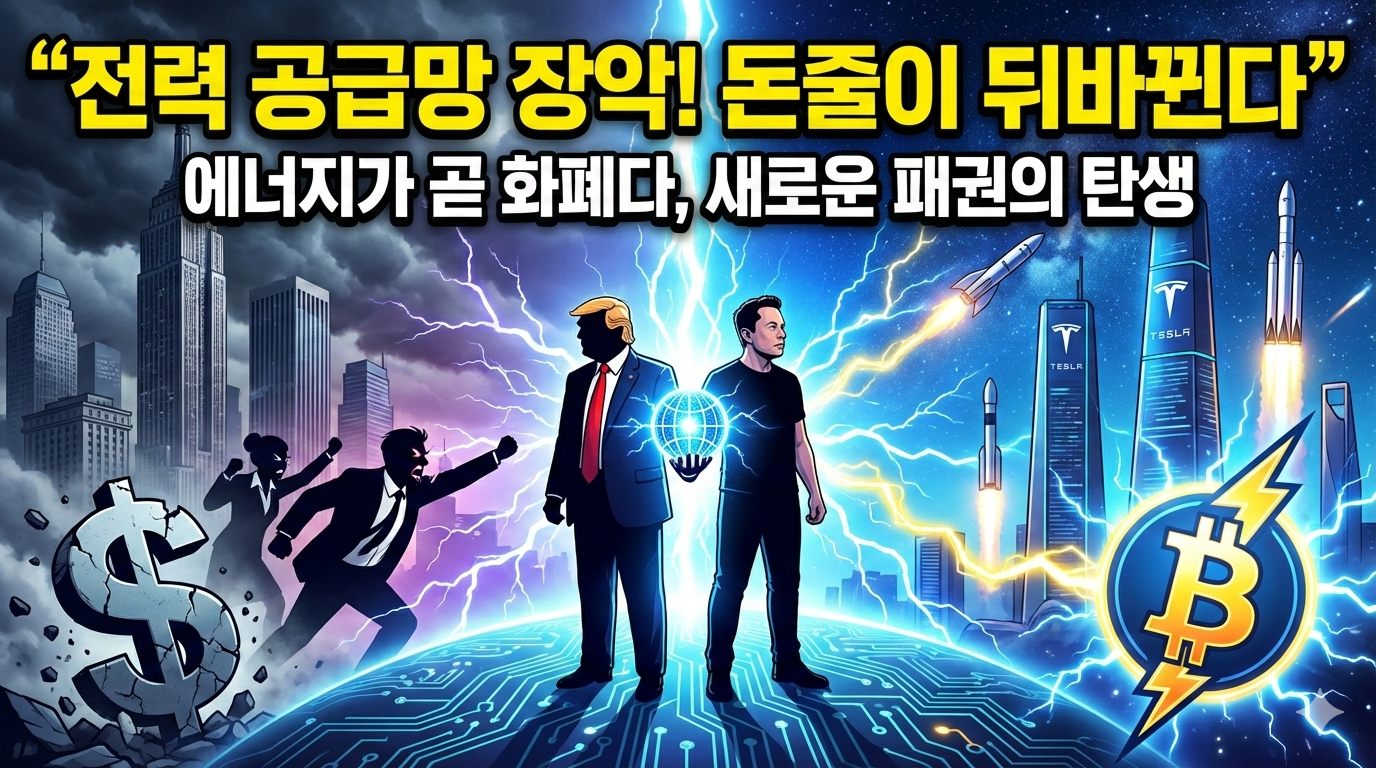
마초들의 결합, 규제 혁파를 향한 거대한 서막
2024년 7월, 필라델피아 선거 유세 현장에서 일론 머스크가 도널드 트럼프에 대한 전폭적인 지지를 선언했을 때, 전 세계 경제계는 요동쳤습니다. 과거 민주당 지지 성향을 보이기도 했던 실리콘밸리의 거물 머스크가 왜 트럼프와 손을 잡았는가에 대한 해답은 ‘규제’라는 두 글자에 압축되어 있습니다. 머스크에게 있어 현시대의 복잡한 규제망—ESG 규제, 노조 관련 제약, 유럽의 디지털시장법(DMA) 및 AI 액트 등은 인류의 진보와 혁신을 가로막는 거대한 장벽이었습니다.
반면, 트럼프는 정치 자금의 줄기가 막힌 상황이었습니다. 전통적으로 트럼프의 ‘제조업 부활’과 ‘반세계화’ 정책은 월가의 금융 자본 수익을 위협하는 요소였기에, 월가는 트럼프에게 등을 돌렸습니다. 이때 머스크와 피터 틸 같은 빅테크의 천재들이 구원투수로 등장합니다. 이들은 트럼프에게 자금을 대는 대신, 규제 혁파와 새로운 경제 시스템의 설계권을 요구했습니다. 이 마초적 동맹은 단순히 권력을 획득하는 것을 넘어, 지난 수십 년간 이어져 온 ‘화폐 경제’와 ‘글로벌리스트’들의 지배 구조를 해체하고 새로운 ‘에너지 패권’을 세우려는 거대한 야심을 품고 있습니다.
The Alliance of Machismo: A Grand Opening Act for Deregulation
In July 2024, at a campaign rally in Philadelphia, when Elon Musk publicly declared his full support for Donald Trump, the global economic establishment was shaken. For Musk—a Silicon Valley titan who had at times shown support for Democrats in the past—the reason for joining forces with Trump can be distilled into a single word: regulation.
To Musk, the dense regulatory web of the modern era—ESG mandates, labor union constraints, Europe’s Digital Markets Act (DMA), and the AI Act—represents a massive barrier to human progress and innovation.
Meanwhile, Trump found himself in a position where the flow of political funding had narrowed. Traditionally, his agenda of “reviving manufacturing” and “anti-globalization” has threatened the profit structures of Wall Street’s financial capital, prompting much of the financial establishment to distance itself from him. At this critical moment, tech visionaries like Musk and Peter Thiel stepped in as unlikely saviors. In exchange for financial backing, they reportedly sought sweeping deregulation and the authority to help design a new economic system.
This bold alliance aims not merely to seize power, but to dismantle the decades-long dominance of the “monetary economy” and the globalist power structure behind it, replacing it with a new era defined by energy supremacy.
달러 패권의 수호자로 자처한 크립토와 빅테크
트럼프와 머스크의 결합에서 가장 흥미로운 지점은 비트코인과 크립토(가상자산)에 대한 입장 선회입니다. 당초 트럼프는 비트코인을 ‘사기’라고 치부하며 달러의 가치를 훼손하는 존재로 여겼습니다. 그러나 머스크와 피터 틸은 이를 달러 패권을 지키는 새로운 무기로 재정의했습니다.
논리는 명확합니다. 트럼프의 관세 전쟁으로 중국이 더 이상 미국 국채를 사지 않고, 월가마저 국채 매입을 거부하며 정부를 압박할 때, 그 공백을 누가 메울 것인가라는 질문에 이들은 ‘스테이블 코인’을 제시했습니다. 스테이블 코인 발행 업체들이 막대한 양의 미국 국채를 매입함으로써 달러의 수요를 창출하고, 비트코인을 ‘디지털 금’으로서 전략적 자산으로 비축하여 중국의 금 보유량에 대항하겠다는 전략입니다. 이는 트럼프로 하여금 크립토를 적이 아닌, 월가와 중국의 간섭에서 벗어나 미국의 독립적인 경제를 구축하기 위한 핵심 도구로 인식하게 만들었습니다.
Crypto and Big Tech as Guardians of Dollar Hegemony
The most intriguing aspect of the Trump–Musk alliance is their shift in stance toward Bitcoin and crypto assets. Initially, Trump dismissed Bitcoin as a “scam,” viewing it as a threat to the value of the U.S. dollar. However, Musk and Peter Thiel reframed crypto as a new weapon to defend dollar dominance.
The logic is straightforward. If, due to Trump’s tariff wars, China stops purchasing U.S. Treasuries, and even Wall Street refuses to absorb government debt, who fills the void? Their answer: stablecoins. Stablecoin issuers could purchase massive amounts of U.S. Treasuries, generating demand for dollars. At the same time, Bitcoin would be accumulated as “digital gold,” serving as a strategic reserve asset to counter China’s gold holdings.
Through this lens, crypto ceases to be an adversary and instead becomes a key instrument for building an independent American economic order—free from both Wall Street’s leverage and China’s influence.
정부효율부(DOGE)와 2026년 7월 4일의 경제 독립 선언
일론 머스크가 수장을 맡게 된 정부효율부(DOGE)의 진정한 목적은 단순히 공무원 숫자를 줄이는 것이 아닙니다. 이는 미국의 행정부와 의회에 뿌리내린 이른바 ‘딥스테이트(Deep State)’와 관료주의적 비효율성을 완전히 제거하려는 시도입니다. 머스크는 트위터(X) 인수 당시 직원 80%를 감축하며 혁신을 이뤄낸 냉혹한 경영 방식을 미 연방 정부에 투영하고 있습니다.
트럼프가 설정한 DOGE의 활동 시한인 2026년 7월 4일은 미국 독립 250주년이 되는 상징적인 날입니다. 그들의 시나리오에 따르면, 이날은 단순히 영국으로부터의 독립을 기념하는 날이 아니라, 지난 50년간 미국 경제를 지배해 온 금융 자본(월가)과 관료주의로부터 미국 경제가 진정으로 독립하는 날이 될 것입니다. 1조 달러 이상의 예산 삭감과 규제 철폐를 통해 민간 주도의 파괴적 혁신이 가능한 토양을 만들고, 이를 통해 ‘미국을 다시 위대하게(MAGA)’ 만들겠다는 구체적인 청사진입니다.
The Department of Government Efficiency (DOGE) and the July 4, 2026 Economic Declaration
The true purpose of the Department of Government Efficiency (DOGE), headed by Musk, is not merely reducing the number of federal employees. It is an attempt to dismantle what they describe as the “Deep State” and entrenched bureaucratic inefficiencies within the U.S. government. Musk’s drastic cost-cutting approach—famously slashing roughly 80% of staff after acquiring Twitter (now X)—is being projected onto the federal system.
Trump reportedly set July 4, 2026—the 250th anniversary of American independence—as DOGE’s symbolic deadline. In this narrative, the date would mark not just independence from Britain, but economic independence from financial capital (Wall Street) and bureaucratic dominance that have shaped the U.S. economy for decades. With over $1 trillion in proposed budget cuts and sweeping deregulation, they envision unleashing private-sector–driven disruptive innovation to “Make America Great Again.”
월가의 반격과 실물 경제의 내전
하지만 이 과정이 순탄치만은 않습니다. 제조업을 살리고 금융업의 과도한 레버리지를 줄이려는 트럼프-머스크 연합에 대항해 월가는 ‘국채 발작’이라는 카드를 꺼내 들었습니다. 제이미 다이먼으로 대표되는 월가의 권력층은 장기 국채 금리를 급등시켜 행정부의 자금줄을 압박하며, 중국과의 관세 전쟁 중단과 비트코인 채택 철회 등을 요구했습니다.
이는 실질적으로 ‘제조업 기반의 실물 경제 세력’과 ‘화폐를 찍어 부를 창출하는 금융 경제 세력’ 간의 내전과도 같습니다. 트럼프는 일시적으로 월가와 타협하는 모습을 보이기도 하지만, 머스크와 함께 준비한 대안들은 더욱 정교해지고 있습니다. 재무부의 바이백 프로그램이나 스테이블 코인 업계를 통한 국채 수요 창출은 월가의 영향력을 최소화하면서도 국가 경제의 연속성을 유지하려는 고도의 전략적 배치입니다.
Wall Street’s Counterattack and an Internal Economic War
The path, however, is not smooth. In response to efforts to revive manufacturing and curb financial leverage, Wall Street figures—symbolized by executives like JPMorgan’s leadership—are portrayed as wielding the threat of surging long-term Treasury yields to pressure the administration. By tightening liquidity, they could demand concessions such as halting tariff escalations or abandoning large-scale crypto adoption.
This amounts to an internal struggle between two economic blocs: the manufacturing-based real economy and the financial economy built on credit creation and leverage. Temporary compromises may emerge, but alternative mechanisms—Treasury buyback programs or stablecoin-driven demand for U.S. debt—are positioned as strategies to reduce Wall Street’s influence while maintaining economic continuity.
에너지가 곧 화폐다 – 머스크의 통합 전력망 장악
이 모든 거대 담론의 종착역은 일론 머스크가 주장하는 ‘에너지가 화폐다’라는 개념에 닿아 있습니다. 인류 역사상 화폐는 항상 에너지를 저장하는 수단이었습니다. 금이 노동 에너지를 담은 원자재였다면, 석유는 페트로 달러 시스템을 통해 현대 화폐의 근간이 되었습니다. 그러나 머스크가 바라보는 미래의 화폐는 바로 ‘전기’입니다.
AI, 휴머노이드 로봇(옵티머스), 자율주행 전기차 등 미래 산업의 모든 핵심은 막대한 전기 에너지를 필요로 합니다. 머스크는 테슬라의 ‘파워월(Powerwall)’과 태양광 발전, 그리고 금융 플랫폼인 ‘X’를 결합하여 전기의 생산, 유통, 소비, 그리고 결제까지 이어지는 전 과정의 공급망을 장악하려 합니다. 개인이 전기를 생산해 저장하고, 이를 X머니나 비트코인으로 결제하며, 남는 전력을 이웃과 거래하는 시스템은 기존 중앙집중형 금융 및 전력망을 완전히 대체할 수 있습니다. 즉, 전력 공급망을 장악한다는 것은 전 세계 경제의 혈액인 화폐 공급망을 장악한다는 뜻이며, 이것이 바로 머스크가 꿈꾸는 무서운 야심의 실체입니다.
“Energy Is Money” — Musk’s Vision of a Unified Power Grid
At the heart of this grand narrative lies Musk’s concept that “energy is money.” Historically, currency has always represented stored energy. Gold embodied accumulated labor energy; oil underpinned the petrodollar system of the modern era. But in Musk’s vision, electricity becomes the future form of money.
AI systems, humanoid robots like Optimus, autonomous electric vehicles—every pillar of the future economy requires vast quantities of electricity. By integrating Tesla’s Powerwall systems, solar generation, and the financial infrastructure of X, Musk could theoretically control the entire chain: production, storage, distribution, and payment for electricity.
In such a system, individuals generate and store electricity, transact using digital platforms or Bitcoin, and trade surplus energy peer-to-peer. This decentralized model challenges centralized grids and traditional financial intermediaries. Controlling the energy supply chain would, in effect, mean controlling the monetary bloodstream of the global economy.
화폐 패권의 교체와 새로운 문명으로의 진입
일론 머스크와 트럼프의 단순한 정치적 야합이 아니라, 산업 문명의 패러다임을 화폐 경제에서 에너지 경제로 전환하려는 거대한 실험입니다. 머스크는 이미 지구라는 행성을 넘어 다행성 인종을 꿈꾸는 ‘미래에서 온 사람’처럼 행동하고 있습니다. 그의 사업들은 각각 흩어져 있는 것처럼 보이지만, 결국 ‘인류의 지속 가능성’이라는 명분 아래 전 세계 경제의 운영 체제(OS)를 자신이 설계한 시스템으로 교체하려는 일관된 방향성을 갖고 있습니다.
앞으로 우리가 마주할 세상은 더 이상 월가의 금리 결정에만 일희일비하는 세상이 아닐 것입니다. 누가 더 효율적으로 전력을 생산하고, 이를 어떤 화폐 단위로 유통하며, 어떻게 규제를 돌파해 혁신을 실현하느냐가 국가와 기업의 성패를 가를 것입니다. 2026년 7월 4일, 그들이 선언할 경제 독립이 성공할지 여부는 알 수 없지만, 이미 전 세계의 돈줄은 보이지 않는 전력선을 타고 머스크의 손아귀로 이동하고 있습니다. 우리는 지금, 자본주의 역사상 가장 급진적인 변화의 한복판에 서 있습니다.
A Transition of Monetary Power and the Dawn of a New Civilization
The alliance between Musk and Trump is framed not as a mere political partnership, but as an ambitious experiment to shift industrial civilization from a monetary economy to an energy economy. Musk often appears as though he operates with a multi-planetary future in mind. His ventures, though diverse, align around a singular objective: redesigning the operating system of global economic life under the banner of long-term human sustainability.
The coming world may no longer revolve solely around interest rate decisions in New York’s financial district. Instead, success may hinge on who can produce energy most efficiently, denominate and circulate it as currency, and break through regulatory barriers to accelerate innovation.
Whether July 4, 2026 will mark a true “economic declaration of independence” remains uncertain. But if this vision materializes, the flow of global capital may increasingly travel along invisible power lines rather than traditional banking networks. We may already be standing at the threshold of the most radical transformation in the history of capitalism.
#일론머스크 #도널드트럼프 #전력공급망 #에너지화폐 #비트코인 #정부효율부 #DOGE #경제패권 #월가 #미래경제 #ElonMusk #DonaldTrump #EnergyEconomy #Bitcoin #DOGE #EconomicPower #FutureEconomy
⚠️ Disclaimer
This post is intended for informational purposes only and does not constitute investment advice or a recommendation for any specific asset or stock. All investment decisions and responsibilities rest solely with the investor.
[출처] 본 블로그 글은 유튜부 채널 ‘머니 인사이드’의 영상을 참고하여 내용을 분석하고 정리한 글입니다. 영상의 일부 내용과 흐름을 바탕으로 작성되었으며, 원본 영상의 저작권은 해당 제작자에게 있습니다. 문제 발생 시 즉시 수정 또는 삭제하겠습니다.