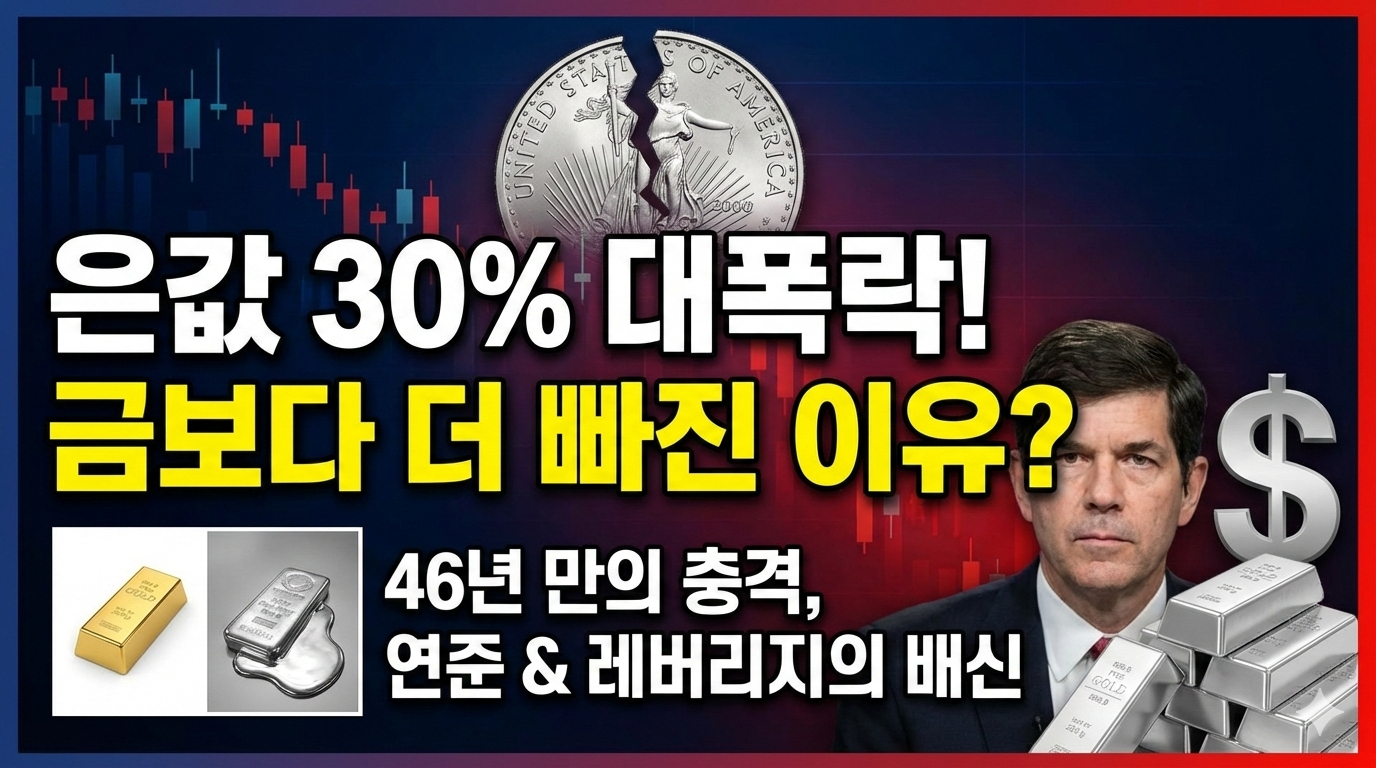
은 시장에 휘몰아친 46년 만의 기록적인 폭락
최근 글로벌 원자재 시장에서 심상치 않은 움직임이 포착되었습니다. 특히 안전자산의 대명사로 불리는 금과 함께 ‘귀금속 형제’로 묶이는 은(Silver)의 가격 변동성이 시장의 모든 이목을 집중시키고 있습니다. 선물 시장에서 은값이 장중 30%나 급락하는 초유의 사태가 발생한 것입니다. 이는 지난 46년간의 역사 속에서도 손에 꼽힐 만큼 거대한 하락 폭이며, 많은 투자자에게 공포와 동시에 “지금이 저점 매수 기회인가?”라는 의문을 동시에 던져주었습니다.
금과 구리 등 다른 주요 광물들도 소폭 하락세를 보였지만, 은의 낙폭은 유독 독보적이었습니다. 금이 안정적인 흐름을 유지하고 구리가 10% 미만의 조정을 받는 동안 은이 왜 이토록 처참하게 무너졌는지, 그 이면에 숨겨진 거시경제적 배경과 시장 구조적 원인을 파헤쳐 보는 것은 향후 원자재 투자 전략을 세우는 데 필수적인 과정입니다. 본 글에서는 은 시장의 특수성, 미국 연준 의장 교체라는 정치·경제적 변수, 그리고 은의 장기적 펀더멘탈을 종합적으로 분석해 보겠습니다.
A Historic Silver Market Crash: The Worst Plunge in 46 Years
A series of unsettling movements has recently been detected in the global commodities market. In particular, price volatility in silver—often grouped with gold as a “precious metals sibling” and traditionally regarded as a safe-haven asset—has captured the full attention of market participants. In the futures market, silver prices plunged as much as 30% intraday, an extraordinary event rarely seen even across 46 years of market history. This dramatic collapse has sparked fear among investors, while simultaneously raising a pressing question: Is this a once-in-a-generation buying opportunity?
While other major commodities such as gold and copper also experienced modest declines, silver’s fall was uniquely severe. Gold maintained relatively stable price action, and copper underwent corrections of less than 10%, making silver’s collapse stand out starkly. Understanding why silver alone suffered such devastation—and uncovering the macroeconomic backdrop and structural market forces behind it—is essential for formulating future commodity investment strategies. This article provides a comprehensive analysis of silver’s market characteristics, the political and economic variable of a potential change in the U.S. Federal Reserve Chair, and silver’s long-term fundamentals.
은 시장의 구조적 취약성과 변동성의 메커니즘
은은 금과 유사한 성격을 띠면서도, 시장의 깊이와 성격 면에서는 판이하게 다른 모습을 보입니다. 전문가들이 은 시장을 “변동성의 화신”이라 부르는 데는 명확한 이유가 있습니다.
첫째, 시장 규모의 차이입니다. 은 시장은 금 시장에 비해 그 규모가 10배 이상 작습니다. 비유하자면, 거대한 바다에 페인트 한 통을 붓는다고 해서 바닷물 색이 변하지는 않지만, 작은 욕조에 붓는다면 즉각적으로 색이 변하는 것과 같습니다. 시장이 작다는 것은 비교적 적은 자금의 유입과 유출만으로도 가격이 요동칠 수 있음을 의미합니다. 특히 중앙은행이나 대형 기관투자자들이 준비 자산으로 대량 보유하는 금과 달리, 은은 이러한 ‘장기 보유 세력’이 부족하여 가격 하락 시 이를 지탱해 줄 완충 장치가 상대적으로 취약합니다.
둘째, 산업재로서의 성격이 강합니다. 금이 주로 투자 및 저축, 가치 저장 수단으로 활용되는 반면, 은은 전체 수요의 절반 이상이 산업용으로 쓰입니다. 은은 지구상에서 전기 전도성이 가장 뛰어난 금속 중 하나로, 반도체, 태양광 패널, 전기차 배터리 등 첨단 산업의 필수 원자재입니다. 이는 은 가격이 실물 경기 변동에 매우 민감하게 반응함을 의미합니다. 경기가 둔화될 것이라는 전망이 나오면, 산업 수요 위축 우려가 즉각 가격에 반영되어 금보다 더 큰 폭으로 하락하게 됩니다.
Structural Fragility of the Silver Market and the Mechanics of Volatility
Silver shares certain characteristics with gold, yet differs profoundly in terms of market depth and structure. There is a clear reason experts often refer to silver as the “embodiment of volatility.”
First, the difference in market size.
The silver market is more than ten times smaller than the gold market. To use an analogy, pouring a can of paint into the ocean would not change the color of the water—but pouring it into a small bathtub would instantly do so. A smaller market means that relatively minor capital inflows or outflows can cause dramatic price swings. Unlike gold, which is held in large quantities by central banks and institutional investors as reserve assets, silver lacks a comparable base of long-term holders. As a result, it has fewer natural buffers to support prices during downturns.
Second, silver’s strong industrial character.
While gold is primarily used for investment, savings, and value storage, more than half of silver demand comes from industrial applications. Silver is one of the most electrically conductive metals on Earth, making it indispensable for semiconductors, solar panels, electric vehicle batteries, and other advanced technologies. This makes silver highly sensitive to changes in real economic activity. When economic slowdown fears emerge, concerns about shrinking industrial demand are immediately reflected in silver prices, often resulting in much sharper declines than those seen in gold.
‘케빈 워시’ 리스크와 달러 패권의 귀환
이번 은값 폭락의 직접적인 트리거(Trigger) 중 하나는 미국의 차기 연준(Fed) 의장 지명 소식이었습니다. 도널드 트럼프 전 대통령이 제롬 파월 의장의 후임으로 케빈 워시(Kevin Warsh)를 지목했다는 소식은 시장에 거대한 파장을 일으켰습니다.
케빈 워시는 시장에서 대표적인 ‘매파(Hawkish)’ 인물로 분류됩니다. 매파란 인플레이션을 억제하기 위해 금리 인상을 지지하고 시장의 유동성을 회복하기보다는 통제하는 성향을 가진 사람들을 뜻합니다. 그는 평소 “무분별한 유동성 공급이 자산 가치 거품과 빈부 격차를 키운다”는 입장을 견지해 왔습니다.
이러한 인물이 달러를 통제하는 연준의 수장이 된다는 것은 두 가지 시나리오를 시사합니다.
-
고금리 유지 또는 금리 인하 지연: 시장이 기대하던 완화적인 통화 정책이 사라질 수 있습니다.
-
달러 강세: 유동성이 회복되지 않고 달러 가치가 높게 유지되면, 달러와 반대로 움직이는 원자재(은, 금 등)의 가격은 하방 압력을 강하게 받게 됩니다.
트럼프가 본래 저금리를 선호함에도 불구하고 매파적인 워시를 선택한 배경에는, 워시가 ‘금리 자체보다는 유동성 공급의 질적 통제’에 집중하고 있다는 분석이 힘을 얻고 있습니다. 결과적으로 “달러 가치가 떨어지지 않을 것”이라는 시장의 판단이 은을 포함한 원자재 시장에서 자금을 빠르게 이탈시킨 주요 원인이 되었습니다.
he “Kevin Warsh” Risk and the Return of Dollar Dominance
One of the direct triggers behind this silver price collapse was news related to the potential appointment of the next Chair of the U.S. Federal Reserve. Reports that former President Donald Trump had selected Kevin Warsh as a potential successor to Jerome Powell sent shockwaves through financial markets.
Kevin Warsh is widely classified as a hawkish figure. In monetary policy terms, hawks prioritize inflation control through tighter financial conditions, favoring higher interest rates and restrained liquidity rather than aggressive stimulus. Warsh has consistently argued that “excessive liquidity fuels asset bubbles and widens wealth inequality.”
The prospect of such an individual leading the Federal Reserve implies two major scenarios:
-
Prolonged high interest rates or delayed rate cuts:
The accommodative monetary policy anticipated by markets may fail to materialize. -
A stronger U.S. dollar:
If liquidity remains constrained and the dollar retains its strength, dollar-denominated commodities—such as silver and gold—face intensified downward pressure.
Despite Trump’s historical preference for low interest rates, analysts suggest that Warsh’s appeal lies in his focus not on interest rate levels per se, but on controlling the quality and structure of liquidity. Ultimately, the market’s conclusion that “the dollar will not weaken” triggered a rapid withdrawal of capital from commodities, with silver taking the hardest hit.
레버리지의 역습, 연쇄 청산의 공포
시장 구조적으로 이번 폭락을 가속화시킨 주범은 ‘레버리지(Leverage)’ 투자입니다. 은 시장은 적은 담보금으로 큰 금액을 굴리는 선물 거래가 활발합니다. 하지만 이는 양날의 검과 같습니다.
가격이 조금만 하락해도 담보금이 부족해지는 ‘마진콜’ 상황이 발생하고, 거래소는 빌려준 돈을 회수하기 위해 투자자의 물량을 기계적으로 강제 매도(청산)하게 됩니다. 이번 사태에서도 특정 가격대가 무너지자 레버리지 물량이 한꺼번에 시장에 쏟아졌고, 이 물량이 다시 가격을 끌어내려 또 다른 청산을 부르는 ‘데드 스파이럴(Dead Spiral)’ 현상이 나타났습니다.
은 시장처럼 규모가 작은 곳에서는 이러한 연쇄 청산이 발생할 때 매수 주체가 실종되면서 가격이 순식간에 진공 상태로 빨려 들어가게 됩니다. 30%라는 경이로운 하락 수치는 바로 이 자본의 취약성이 드러난 결과라고 볼 수 있습니다.
The Leverage Backlash and the Fear of Forced Liquidations
From a structural standpoint, the primary accelerant of this crash was excessive leverage. The silver market is particularly active in futures trading, where large positions can be controlled with relatively small amounts of collateral. This leverage, however, is a double-edged sword.
Even modest price declines can trigger margin calls, prompting exchanges to forcibly liquidate positions in order to recover borrowed funds. In this episode, once key price levels were breached, leveraged positions flooded the market simultaneously. This selling pressure drove prices even lower, triggering further liquidations in a destructive feedback loop—a classic “dead spiral.”
In a market as small as silver’s, such cascading liquidations can cause buyers to disappear entirely, creating a vacuum where prices collapse at breathtaking speed. The staggering 30% decline is a direct manifestation of this structural vulnerability.
장기적 전망 – 수요와 공급의 불균형
단기적인 폭락에도 불구하고, 은의 장기적인 펀더멘탈(내재 가치)은 여전히 견고하다는 시각도 존재합니다. 그 핵심은 ‘공급 부족’과 ‘산업적 필요성’에 있습니다.
1. 대체 불가능한 산업 수요: 인공지능(AI)의 확산으로 인한 반도체 수요 폭증, 에너지 전환에 따른 태양광 패널 확대, 전기차 보급 등 미래 산업의 핵심 동력에는 모두 은이 들어갑니다. 현재 은을 완벽하게 대체할 수 있는 경제적인 금속은 사실상 없다고 평가받습니다.
2. 구조적인 공급 제한: 은은 단독 광산에서 채굴되는 경우보다 구리, 납, 아연 등을 채굴할 때 나오는 ‘부산물’인 경우가 많습니다. 즉, 은값이 오른다고 해서 은 채굴량을 즉각적으로 늘리기 어렵고, 다른 광물들의 경기 상황에 공급이 종속되어 있습니다. 또한, 금과 달리 산업용으로 쓰인 은은 회수 및 재활용 비용이 너무 비싸 대부분 폐기됩니다. 이는 시장에 유통되는 은의 양이 지속적으로 줄어들 수 있음을 시사합니다.
Long-Term Outlook: Imbalance Between Supply and Demand
Despite the short-term collapse, many analysts argue that silver’s long-term fundamentals remain intact. The core of this argument lies in supply constraints and irreplaceable industrial demand.
1. Non-substitutable industrial demand:
The expansion of artificial intelligence driving semiconductor demand, the global energy transition accelerating solar panel deployment, and the widespread adoption of electric vehicles all rely heavily on silver. At present, no economically viable material can fully replace silver in these applications.
2. Structural supply limitations:
Silver is rarely mined as a primary resource; it is most often produced as a byproduct of copper, lead, and zinc mining. This means silver supply cannot be quickly increased in response to rising prices and remains dependent on the economic conditions of other metals. Furthermore, unlike gold, silver used in industrial applications is rarely recycled due to prohibitive costs, resulting in permanent removal from circulation. This suggests that the total amount of available silver may continue to decline over time.
투자자가 견지해야 할 태도
은 시장의 이번 폭락은 우리에게 중요한 교훈을 줍니다. 은은 강력한 성장 잠재력을 가진 자산인 동시에, 시장 규모가 작고 레버리지 비중이 높아 언제든 예상을 뛰어넘는 변동성을 보일 수 있다는 점입니다.
현재의 폭락이 “바닥”인지에 대해서는 의견이 갈리지만, 확실한 것은 미국 통화 정책의 향방과 달러 인덱스의 움직임이 확인될 때까지는 극도로 신중한 접근이 필요하다는 것입니다. 은 투자는 금보다 훨씬 더 높은 위험 감수 능력을 요구합니다. 장기적인 산업 수요의 성장성을 믿는다면 분할 매수 관점에서 접근할 수 있겠으나, 단기적인 시세 차익을 노린 고배율 레버리지 투자는 이번 사태에서 보듯 전 재산을 순식간에 앗아갈 수 있는 위험한 선택이 될 수 있습니다.
결국 성공적인 경제적 의사결정은 감정에 휘둘리는 것이 아니라, 이러한 복합적인 거시 지표와 시장의 생리를 냉철하게 읽어내는 것에서 시작됩니다.
The Mindset Investors Must Maintain
This silver market crash offers a critical lesson. Silver is an asset with powerful growth potential, yet its small market size and high leverage exposure make it prone to extreme, unpredictable volatility.
Opinions differ on whether the current collapse represents a definitive bottom. What is certain, however, is that extreme caution is warranted until the trajectory of U.S. monetary policy and the U.S. dollar index becomes clearer. Investing in silver demands a much higher risk tolerance than investing in gold. Those who believe in its long-term industrial demand may consider a dollar-cost averaging approach, but short-term, high-leverage speculation can—as demonstrated by this event—wipe out an entire portfolio in an instant.
Ultimately, successful financial decision-making begins not with emotional reactions, but with a calm and rational understanding of complex macroeconomic indicators and market mechanics.
#은값폭락 #실물자산투자 #케빈워시 #연준의장교체 #원자재전망 #은선물거래 #레버리지리스크 #인플레이션헤지 #태양광원자재 #경제전문분석 #SilverCrash #RealAssetInvesting #KevinWarsh #FedChairTransition #CommodityOutlook #SilverFutures #LeverageRisk #InflationHedge #SolarMaterials #MacroeconomicAnalysis
⚠️ 본 포스팅은 특정 자산 및 종목에 대한 투자 권유가 아닌 정보 전달을 목적으로 합니다. 모든 투자의 책임은 투자자 본인에게 있습니다.
[출처] 본 블로그 글은 ‘지식한입’의 [금보다 은이 더 빠졌다] 영상을 바탕으로, 은 폭락상황에서 우리가 주목해야 할 투자 전략 중심으로 심도 있게 분석한 포스팅입니다.